
If you are interested in dates fruit wholesaling, do a little research before you sign anything or pay a deposit. This guide covers what to know about dates fruits before you choose a supplier, from varieties and grades to the questions worth asking. There are several types of dates on the Malaysian market, and each one sells to a different buyer.
One point first. Malaysia has no commercial date-growing trade, so every box of buah kurma you buy here, wholesale or retail, was imported. When a company talks about "our dates", it means dates it bought from abroad and packed or resold. That is normal. What you want to find out is how well it buys, stores and describes them.
Decide what you will sell before you look for a supplier
A date company that suits a kedai runcit near a surau will not always suit a café that blends dates into drinks. Write down three things before you call anyone: which varieties your customers ask for, roughly how many kilos you move in a normal month, and how many you move in the weeks before Ramadan. Demand for dates peaks before and during Ramadan. Hari Raya, weddings (hantaran), kenduri and umrah gifts are the other busy periods, and your order pattern should follow them.
With that list in hand, compare suppliers on the varieties you actually need, not on the length of their catalogue.
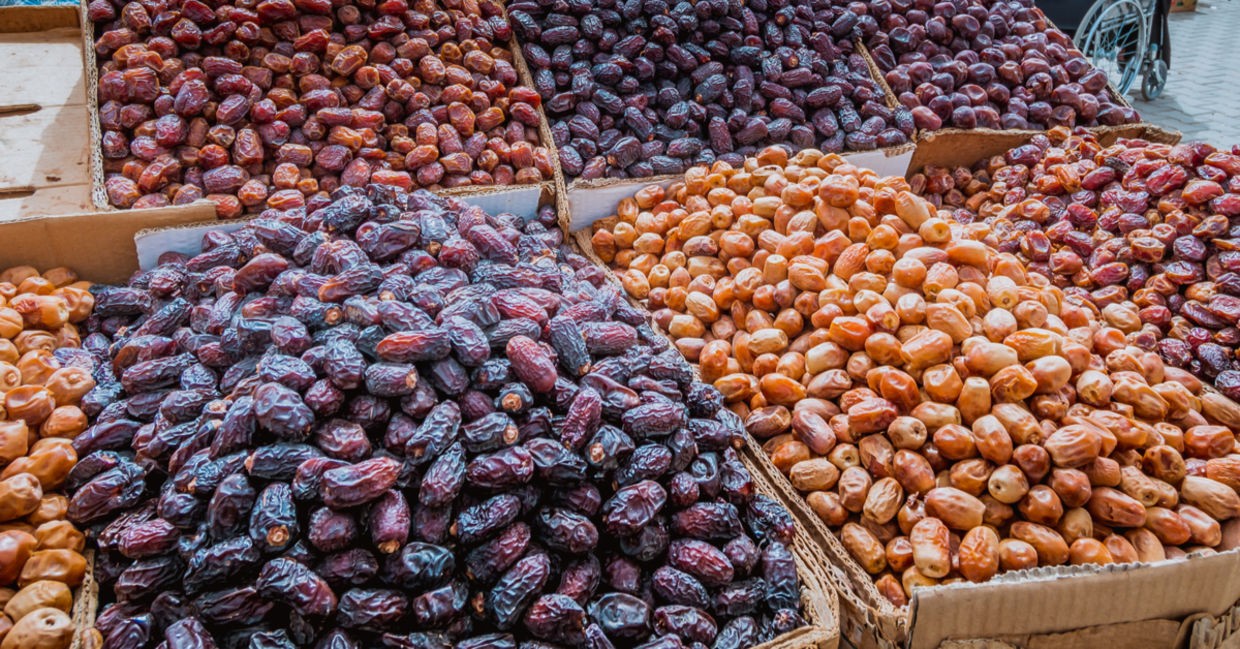
The varieties you will meet most often
The table below gives the origin you can safely state for each common trade name and a plain description of the fruit. It doubles as a check on any supplier. If a price list puts Deglet Noor in Madinah, the company has not looked closely at its own stock.
| Variety (trade name) | Origin | What the fruit is like |
|---|---|---|
| Ajwa ("Kurma Nabi") | Madinah, Saudi Arabia | Small, roundish, near-black, finely wrinkled skin, soft |
| Safawi | Madinah region, Saudi Arabia | Longer than Ajwa, dark brown to black, soft and chewy |
| Mabroom | Madinah region, Saudi Arabia | Long and slender, reddish-brown, semi-dry, chewy |
| Sukari | Al-Qassim, Saudi Arabia | Golden-amber, very sweet; sold soft (rutab) or drier |
| Medjool | Originated in Morocco; ask the supplier which country the carton came from | Large, very soft, rich caramel taste |
| Mazafati | Bam, Kerman province, Iran | Dark, very soft, high moisture; needs refrigeration |
| Mariami | Iran | Dark, semi-dry, chewy |
| Piarom | Iran (Hormozgan) | Dark, semi-dry, thin skin |
| Sayer (also sold as Stamaran) | Iran (Khuzestan) | Amber-brown, semi-dry |
| Deglet Noor ("kurma tangkai" on the stem) | Tunisia / Algeria | Golden, translucent, semi-dry |
Mariami and Piarom are separate varieties, even though some packs put both names on one label. Ask which one is inside the carton.
Grades mean what the seller says they mean
Labels such as A, AA, AAA or Jumbo look like a standard. They are not. Each importer sorts its own stock by size and gives the sorts its own names, so "AA" from one company and "AA" from another can be quite different fruit.
This matters most when you compare quotes. A cheaper AAA is not a bargain if it is the same size as another company's A. Ask for the grade names in writing, ask what size difference separates them, and if the order is large, ask for a sample of each grade you are considering. Lay the samples next to each other at home. You will learn more in five minutes than from any brochure.
We cover the practical side of checking a supplier, from samples to site visits, in our guide to finding a dates wholesaler you can trust.
Where to look for a date company
There are several places where you can find dates fruit wholesalers. Start with companies that list their varieties and grades clearly online. You can check a company's website to see what it offers and whether its descriptions match the table above. A site that sells Ajwa but describes it as firm and golden has not looked closely at its own product.
The grocery store is worth a visit too, though not as a supplier. Walk the dried-fruit shelf and note which varieties and pack sizes are already on sale near you. If every shop in your area carries the same 1kg box of one variety, a different variety may give you something to sell that the shop down the road does not have.
Online searching also lets you compare wholesale quotes without leaving the shop. Keep the comparison fair: same variety, same grade name, same pack weight, and delivery cost included. Our Malay-language article on buying buah kurma borong for a business walks through landed cost and pack sizes in more detail.
Questions to put to any buah kurma wholesaler
The answers to these questions separate a careful company from one that only resells whatever arrived last. None of them needs special knowledge to ask.
| Ask this | Why the answer matters |
|---|---|
| Which country is this variety from? | Origins are fixed. Deglet Noor comes from Tunisia or Algeria, Ajwa from Madinah. A vague answer is a warning. |
| What do your grade names mean for this variety? | Grades are the importer's own size sorting, not an industry standard. |
| Is this rutab or tamr? | Rutab is the soft, fresh-ripe stage and tamr the drier, fully ripe stage. Ask which stage you are being quoted for. |
| How is soft stock like Mazafati kept? | Mazafati needs refrigeration. Ask how it is stored before and during delivery. |
| What are the carton sizes and the minimum order? | A minimum that suits a big shop can tie up a small shop's cash for months. |
| Can I see a sample of each grade? | Grade names differ between companies; the fruit itself does not lie. |
| Who pays if a carton arrives damaged? | Settle this before the first order, not after. |
Timing your buah kurma orders around the harvest
Gulf and Middle-East dates are mostly harvested from late summer to autumn, roughly August to November, and new-season stock reaches Malaysia some weeks later. Booking your Ramadan quantity early gives the supplier time to set aside the grades you want.
Do not treat soft dates outside that window as suspicious. Mazafati, sold here as "Rotab Mazafati Bam" or kurma madu, is cold-stored and sold year-round, which is why you can buy rotab in any month. If a supplier tells you otherwise, check the rest of what they say as well.
Handling is the other half of timing. A carton that sat in a hot lorry for a day is not the same carton that left the cold room. Our piece on bulk date logistics looks at shipping, customs paperwork and storage from the supplier's side.

If you sell dates as an ingredient
Perhaps you plan to sell dates for cakes, spreads, fillings or desserts rather than for eating whole. That buyer cares about different things. Appearance matters less when the fruit is going to be chopped or blended. A smaller grade, or a broken or less even sort if the supplier offers one, may do the job, so ask for its price per kilo next to the whole-fruit grade.
Say so when you ask for a quote. A wholesaler who knows the dates are going into a recipe can point you to a suitable grade instead of the gift-box sort. If you also sell whole dates for gifting, keep two separate lines of stock so each line is priced and labelled for its own buyer.
Short answers to common questions
Are any dates in Malaysia grown locally?
No. Malaysia has no commercial date-growing trade, so all buah kurma on sale here is imported.
Is a Grade AAA date the same everywhere?
No. Grade names are each importer's own size sorting. Compare samples, not labels.
Why can I buy soft rotab dates outside the harvest season?
Varieties such as Mazafati are cold-chained after harvest, so soft rotab stays available all year.
When should I place my Ramadan order?
Early. Demand peaks before and during Ramadan, and an early booking leaves room to settle grades and delivery dates.
Finding the right date company takes an afternoon of questions and a few samples, and that is time well spent compared with a season of stock your customers do not want. More about this site is on the About Us page and the contact page.